
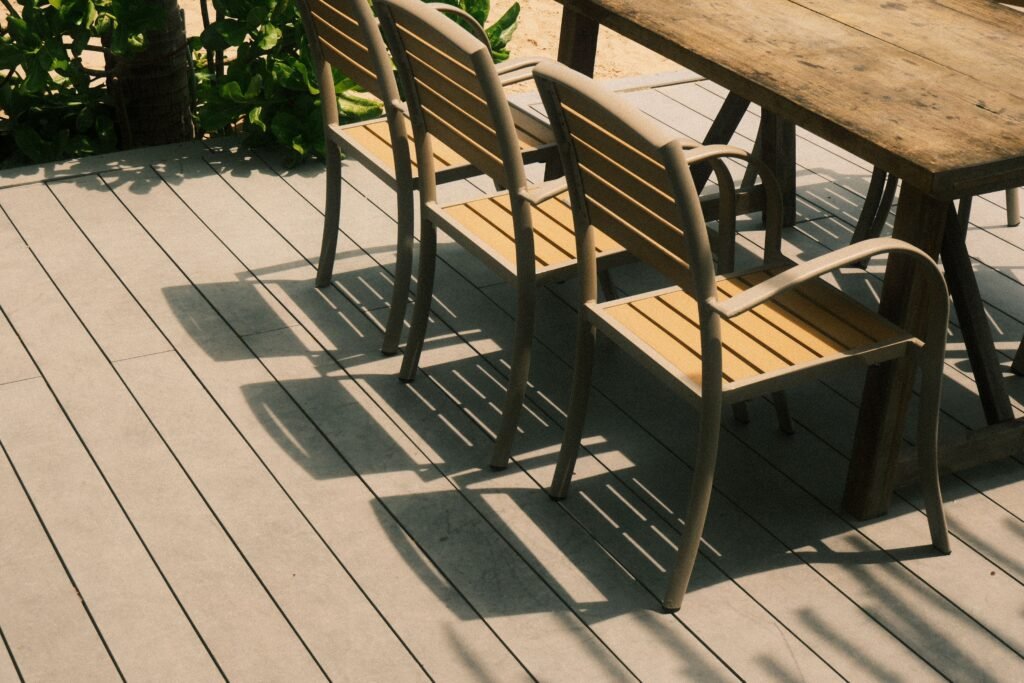
However, like any outdoor feature, decking is exposed to the elements throughout the year. Rain, frost, sunlight and general foot traffic can gradually take their toll, causing discolouration, algae build-up, loose boards and general wear and tear.
The good news is that with a little regular care and attention, you can keep your decking looking its best and help extend its lifespan. In this guide, we’ll cover some simple but effective decking maintenance tips to help you protect your investment and enjoy your outdoor space all year round.
1. Clean Your Decking Regularly
One of the simplest ways to maintain your decking is to keep it clean. Over time, dirt, fallen leaves, mud and other debris can accumulate on the surface, particularly during autumn and winter.
Regular sweeping with a stiff-bristled brush will help prevent debris from building up. It’s also important to clear the gaps between decking boards, as trapped leaves and dirt can restrict drainage and encourage moisture to collect.
For a more thorough clean, wash the surface using warm water and a suitable decking cleaner. Always follow the manufacturer’s instructions and choose a product appropriate for your decking material.
Avoid using overly aggressive cleaning methods, as these can damage the surface or protective finish, particularly on softer timber decking.
2. Remove Algae, Moss and Slippery Build-Up
The UK’s damp weather can create ideal conditions for moss, algae and mildew to develop on outdoor decking. These are particularly common in shaded areas where surfaces take longer to dry.
Apart from affecting the appearance of your decking, algae and moss can make the surface extremely slippery, increasing the risk of accidents.
To prevent this:
- Sweep away leaves and organic debris regularly.
- Keep surrounding plants and shrubs trimmed to improve airflow and sunlight.
- Use a suitable decking cleaner to remove algae and moss.
- Avoid allowing standing water to collect on the surface.
- Check shaded areas regularly, as these are more likely to develop build-up.
If your decking has become particularly slippery or heavily affected by algae, a specialist cleaning treatment may be needed.
3. Protect Wooden Decking with a Suitable Treatment
If you have natural timber decking, applying a protective treatment is an important part of its long-term care.
Wood is naturally affected by changes in weather and moisture levels. Without suitable protection, prolonged exposure to rain and sunlight can cause timber to fade, dry out, crack or deteriorate.
Decking oils, stains and protective treatments help nourish and protect the timber while maintaining its appearance.
Before applying any treatment:
- Thoroughly clean the decking and remove any dirt or algae.
- Allow the timber to dry completely.
- Lightly sand any rough or weathered areas if necessary.
- Apply a suitable decking oil or stain according to the manufacturer’s instructions.
- Allow sufficient drying time before walking on the surface or placing furniture back.
The frequency of treatment will depend on the type of timber, the product used and how exposed your decking is to the elements. As a general guide, inspect your decking annually to determine whether it needs another application.
Top tip: Always test a treatment on a small, inconspicuous area first to check the colour and finish before applying it across the entire deck.
4. Inspect Your Decking for Signs of Damage
Regular inspections can help you identify small problems before they develop into more expensive repairs.
Changes in temperature and moisture can cause timber to expand, contract and gradually deteriorate. Over time, this may lead to loose boards, raised fixings or weakened structural components.
When inspecting your decking, look out for:
- Loose or raised decking boards.
- Protruding screws, nails or fixings.
- Cracked, split or splintering timber.
- Signs of rot or soft, weakened wood.
- Unstable steps, handrails or supporting structures.
- Poor drainage or areas where water collects.
Pay particular attention to the supporting frame and joists, as damage beneath the surface may not always be immediately visible.
If you notice any structural damage, avoid using the affected area until it has been properly assessed and repaired.
5. Improve Drainage and Prevent Standing Water
Good drainage is essential for keeping decking in good condition. Water that becomes trapped beneath or between decking boards can encourage rot, mould and algae growth, particularly with natural timber.
Make sure the gaps between boards remain clear and that water can drain away freely. Remove any accumulated leaves, soil or debris that could block drainage routes.
It’s also worth checking the area underneath your decking, ensuring there is sufficient airflow and that water isn’t collecting around the supporting structure.
If your decking is installed close to the ground, ventilation is particularly important. Restricted airflow can prevent the timber from drying properly after rainfall, potentially shortening its lifespan.
6. Take Care of Your Decking Furniture and Surroundings
Decking maintenance isn’t just about looking after the boards themselves. The way you use and furnish your outdoor space can also affect its condition.
Heavy garden furniture can cause scratches, dents and unnecessary wear, particularly when dragged across the surface. Consider using protective pads beneath furniture legs and lifting items rather than pulling them.
Pots and planters can also trap moisture underneath them, potentially leaving marks or encouraging algae growth. Raise them slightly using suitable pot feet to allow air to circulate and water to drain away.
During autumn and winter, try to keep the surface clear of fallen leaves and debris, as these can become slippery when wet.
A little attention to your decking’s surroundings can make a noticeable difference to its overall condition.
7. Adjust Your Decking Maintenance Throughout the Year
Different seasons bring different challenges for outdoor decking. Adapting your maintenance routine throughout the year can help keep it protected.
Spring
Spring is a good time to give your decking a thorough clean after the winter months. Check for any damage caused by frost and damp weather, remove algae and assess whether timber needs a fresh protective treatment.
Summer
During summer, inspect your decking for signs of fading, drying or cracking caused by prolonged exposure to sunlight. Keep the surface clean and check that any protective treatment remains in good condition.
Autumn
Fallen leaves and wet weather can quickly create slippery conditions. Sweep your decking regularly, clear drainage gaps and remove any moss or algae before winter arrives.
Winter
Try to keep your decking as clear as possible during winter. Avoid allowing standing water to collect and take extra care when surfaces are wet or icy. If you have timber decking, avoid using harsh de-icing products unless they are specifically approved for your decking material.
8. Know When Your Decking Needs Replacing
Even with regular maintenance, decking won’t last forever. Eventually, weather exposure, general wear and structural deterioration may mean that repairs are no longer sufficient.
If your decking has widespread rot, extensive cracking, unstable boards or significant damage to its supporting structure, it may be time to consider a replacement.
Replacing old or deteriorating decking can also be an opportunity to rethink your outdoor space. You might want to change the layout, introduce a different decking material or create a more practical area for dining and entertaining.
Composite decking, for example, offers an alternative to natural timber and generally requires less ongoing maintenance, although it still benefits from regular cleaning and care.
The right choice will depend on your garden, budget and how you intend to use the space.
Conclusion: Keep Your Decking Looking Its Best with Lyuven
Looking after your garden decking doesn’t need to be complicated. Regular cleaning, seasonal inspections and appropriate protective treatments can all help maintain its appearance, prevent damage and extend its lifespan.
However, if your existing decking has seen better days or you’re thinking about creating a completely new outdoor living area, professional installation can make all the difference.
At Lyuven Garden Maintenance, we provide professional garden improvement and landscaping services, helping homeowners transform their outdoor spaces into attractive, practical areas to enjoy.
Whether you’re looking to replace old decking or introduce a brand-new feature to your garden, we’d be happy to help.
Explore our Decking Installation Services to find out more about how we can help create the perfect decking area for your garden.