
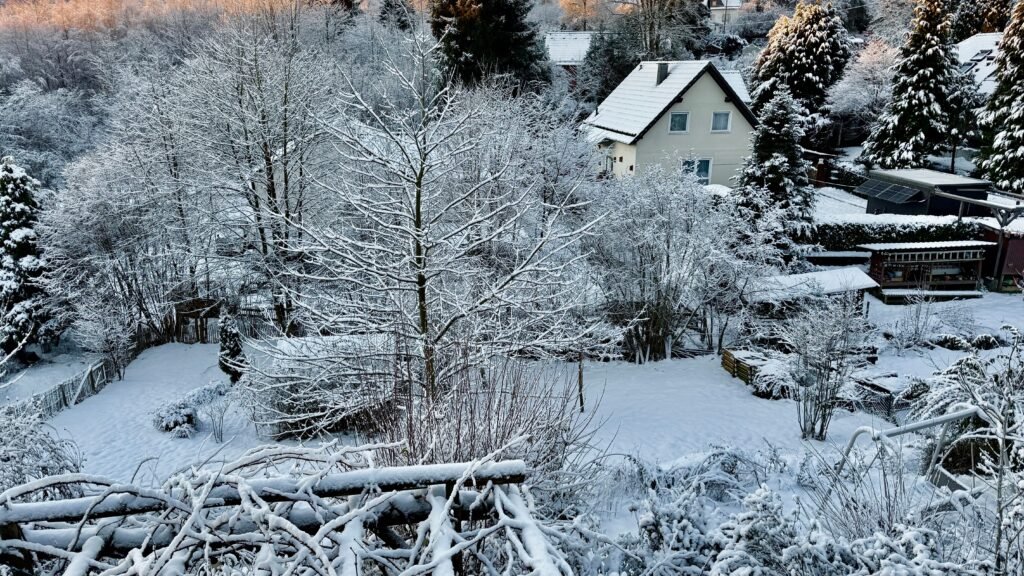
Winter weather in the UK can bring frost, heavy rainfall and strong winds, all of which can take their toll on an unprepared garden. Taking the time to tidy, protect and maintain your outdoor space now will help prevent unnecessary damage and make getting your garden back into shape much easier when spring arrives.
Whether you have a small courtyard, a family garden or a larger landscaped outdoor space, here’s our guide to preparing your garden for winter.
1. Clear Fallen Leaves and Garden Debris
One of the simplest but most important winter garden maintenance tasks is clearing away fallen leaves, dead plants and general garden debris.
Although autumn leaves can look beautiful, allowing them to build up across your lawn, patios and pathways can cause problems. Thick layers of wet leaves can block sunlight from reaching your grass, encourage moss growth and create slippery surfaces around your garden.
Start by:
- Raking fallen leaves from your lawn regularly.
- Clearing leaves and debris from patios, pathways and decking.
- Removing dead annual plants and unwanted weeds from flowerbeds.
- Clearing away fallen branches and general garden waste.
- Adding suitable organic material to your compost heap.
You don’t need to remove every fallen leaf from your garden. Leaving some undisturbed in suitable areas can provide shelter for beneficial insects and other wildlife during winter.
Keeping on top of garden clearance will help your outdoor space remain tidy and reduce the amount of work needed when spring comes around.
Take a look at our garden clearance services.
2. Prepare and Protect Your Lawn
Your lawn may not need as much attention during winter, but preparing it properly before the colder weather arrives can help keep it healthy.
Grass growth naturally slows down as temperatures fall, meaning your lawn won’t require the same level of maintenance as it does during spring and summer.
Here are a few ways to prepare your lawn for winter:
Give your lawn its final cuts
Continue mowing while the weather remains mild and the grass is still growing. As temperatures drop, reduce the frequency of mowing and avoid cutting the grass too short. A slightly longer lawn is better equipped to cope with colder conditions.
Remove fallen leaves
Regularly rake leaves from your lawn to prevent them from blocking sunlight and trapping moisture against the grass.
Avoid walking on frosty grass
Grass blades become brittle when frozen, so walking across a frosty lawn can cause damage and leave visible footprints. Try to avoid using your lawn when it is frozen or particularly waterlogged.
Check for drainage problems
Heavy winter rainfall can leave lawns waterlogged, particularly in gardens with compacted soil or poor drainage. If you notice areas where water regularly collects, it may be worth investigating potential drainage improvements.
Taking care of your lawn now will give it a better chance of recovering and looking its best when warmer weather returns.
3. Protect Plants, Shrubs and Flowerbeds
Not all plants are suited to colder temperatures, so it’s important to identify which ones in your garden may need additional protection.
Tender plants, particularly those grown in pots, can be vulnerable to frost and freezing conditions. Depending on the plant, you may need to move containers into a sheltered position, a greenhouse or somewhere more protected.
Other useful winter gardening tasks include:
- Wrapping vulnerable plants with horticultural fleece when frost is expected.
- Moving particularly sensitive pots away from exposed areas.
- Adding a layer of mulch around suitable plants to help insulate their roots.
- Removing dead or diseased plant material.
- Checking plant supports and securing taller plants against strong winds.
It’s also worth reviewing your flowerbeds. Remove persistent weeds and consider adding compost or organic matter to improve the soil.
Avoid cutting back every plant before winter. Some perennials have attractive seedheads and stems that provide valuable shelter and food for wildlife throughout the colder months. Always check the individual needs of your plants before pruning.
4. Trim Hedges and Tidy Trees
Hedges, shrubs and trees can benefit from some attention before winter, particularly if they have become overgrown during the growing season.
Removing dead, damaged or diseased branches can help improve the overall condition of your plants and reduce the risk of branches becoming loose during strong winds.
However, it’s important to consider the type of plant and the correct time of year to prune it. Some plants should be pruned in late winter or spring, while others benefit from attention during autumn.
Hedge trimming can also help keep your garden looking neat and manageable throughout the winter months.
If you have larger trees or substantial overgrowth that needs attention, consider getting in touch with us for professional help to ensure the work is carried out safely and correctly.
5. Clean and Protect Patios and Decking
Winter weather can be unpredictable, and strong winds can put additional pressure on fencing, gates, sheds and other garden structures.
Taking the time to inspect these features before winter can help identify small problems before they become bigger and more expensive repairs.
Walk around your garden and check for:
- Loose or damaged fence panels.
- Unstable fence posts.
- Loose trellis or garden supports.
- Damaged shed roofs or doors.
- Gates that no longer close or secure properly.
Pay particular attention to fencing that has become loose or weakened over time. Repairing or replacing damaged panels before winter can help prevent further problems during periods of strong winds.
If your garden needs new fencing or structural improvements, autumn can be a good time to organise the work ahead of spring.
6. Take Care of Your Decking Furniture and Surroundings
Decking maintenance isn’t just about looking after the boards themselves. The way you use and furnish your outdoor space can also affect its condition.
Heavy garden furniture can cause scratches, dents and unnecessary wear, particularly when dragged across the surface. Consider using protective pads beneath furniture legs and lifting items rather than pulling them.
Pots and planters can also trap moisture underneath them, potentially leaving marks or encouraging algae growth. Raise them slightly using suitable pot feet to allow air to circulate and water to drain away.
During autumn and winter, try to keep the surface clear of fallen leaves and debris, as these can become slippery when wet.
A little attention to your decking’s surroundings can make a noticeable difference to its overall condition.
7. Look After Garden Furniture and Outdoor Equipment
Garden furniture, cushions, barbecues and other outdoor accessories can deteriorate if left exposed to harsh winter weather.
Where possible, move lightweight furniture, cushions and decorative accessories into a shed, garage or other dry storage area.
For larger items that cannot be moved, consider using suitable weatherproof covers.
It’s also a good opportunity to:
- Clean and dry garden furniture before storing it.
- Store garden cushions and parasols somewhere dry.
- Clean and put away gardening tools.
- Drain and store garden hoses where appropriate.
- Secure lightweight items that could be blown around in strong winds.
A little organisation now will help protect your outdoor belongings and save you time when you want to start enjoying your garden again.
8. Plan Ahead for Spring
Winter doesn’t mean you have to stop thinking about your garden. In fact, it’s an excellent opportunity to start planning improvements for the following year.
If your garden has become tired, overgrown or difficult to maintain, now is a good time to consider what you’d like to change.
Think about whether your outdoor space could benefit from:
- New flowerbeds or additional planting.
- A redesigned patio or seating area.
- New decking for entertaining.
- Improved fencing for additional privacy.
- A new lawn or artificial turf.
- Better garden drainage or landscaping.
- A more manageable, low-maintenance garden layout.
Planning ahead means you can organise any necessary work in advance, giving you a head start when the warmer weather arrives. We can help with our array of professional garden services. Take a look at what services we have to offer.
Professional Winter Garden Maintenance in South West London
Preparing your garden for winter can be time-consuming, particularly if you have a larger outdoor space or a busy schedule.
At Lyuven Garden & Maintenance, we provide professional, reliable garden maintenance and landscaping services across Sutton, Central and South West London.
Established in 2017, we help homeowners keep their outdoor spaces looking their best throughout the year. Our friendly team of fully trained and licensed gardeners takes pride in delivering quality workmanship and dependable service, with solutions tailored to each garden.
Whether you need help getting your garden ready for winter or want to make improvements ahead of spring, we offer a range of services to help.
Get Your Garden Ready for Winter with Lyuven
Don’t leave your garden until spring. Get ahead of the seasonal weather and give your outdoor space the care it needs.
If you’re based in Sutton, Central or South West London and need help preparing your garden for winter, get in touch with Lyuven Garden & Maintenance today.